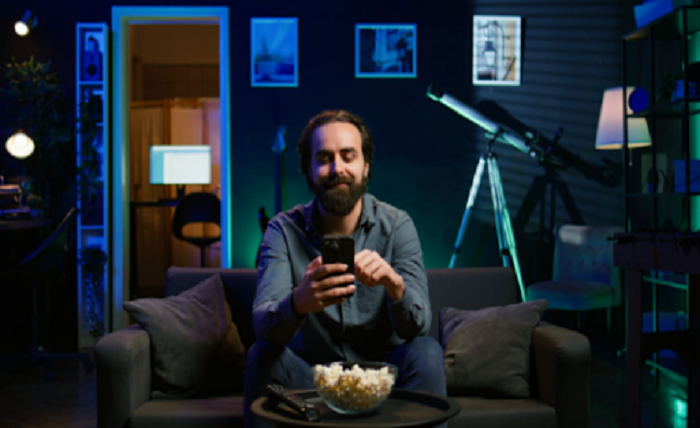
Not long ago, “online entertainment” came with a little checklist. Decent laptop. Stable internet. A card you could use online. Enough patience to wrestle with buffering. If you lived outside a big city, or shared one device with the whole family, entertainment was still possible, just… harder. You planned for it.
Now it’s the opposite. Entertainment slips into your day like background music. On the bus, in a queue, during lunch, while the TV runs in the other room. If you want a quick snapshot of how modern platforms package that kind of low-friction access, click into tamasha online and look at how quickly you can figure out what to do without reading a “How it works” page first. That ease is the point.
So what changed? A bunch of things, and they stacked in the same direction: fewer barriers, more formats, more ways in.
Smartphones did what PCs never could: they made entertainment personal
The simplest explanation is also the most powerful. People got a screen that belongs to them.
A phone is not just a device. It’s a private space. You don’t need to negotiate for TV time. You don’t need to boot up a shared computer. You don’t even need a long block of free time. That personal ownership is a giant accessibility upgrade, especially in households where screens used to be communal.
And phones got good enough. Not “gaming rig” good, but good enough for streaming, casual gaming, live video, and social content without feeling like punishment.
Data got cheaper, networks got better, and buffering lost its power
Accessibility isn’t only about devices. It’s about the cost and reliability of being online.
In many markets, data prices dropped over the years while coverage improved. Even when connections aren’t perfect, platforms now design for imperfection. Adaptive bitrate streaming is a big deal here. The video quietly lowers quality instead of stopping. That sounds like a minor technical trick, but it changes behavior. People stop bracing for failure.
You also see “lite” modes, offline downloads, and smarter caching. These features don’t win awards. They win users.
The web stopped being clunky, and instant access came back
We went through a phase where everything had to be an app. Apps still matter, obviously, but the browser has made a comeback as an easy entry point.
Why? Because clicking a link is still the lowest-commitment move on the internet.
Modern browser experiences load faster, look better on mobile, and handle media properly. That matters for beginners and casual users who don’t want to install yet another thing just to “see what it is.” Instant play, instant watch, instant browse. The barrier drops again.
Pricing models shifted from “pay up” to “try first”
Entertainment used to be gated by upfront cost. Buy the game. Pay for the channel package. Commit to the subscription.
Now platforms compete by lowering the first step:
- freemium models that let you start without paying
- free trials that actually show the product, not a locked demo
- ad-supported tiers that trade money for patience
- microtransactions and small passes for short-term access
- bundles through mobile carriers or device ecosystems
Is every model consumer-friendly? No. Some are designed to gently push you into spending without noticing. But from a pure accessibility angle, the shift is huge. You can participate with almost no budget, then decide later if it’s worth paying.
Payments got smoother, which helped global audiences join in
Another quiet revolution: paying online is less of a headache than it used to be.
Digital wallets, local payment methods, faster verification, and one-tap purchases remove the “I can’t pay for this anyway” problem. That brings in users who were locked out by card requirements or complicated payment flows.
It also changes what platforms can offer. When payments are easy, services can sell smaller things: a weekend pass, a one-off event, a creator subscription, a premium feature for one month. You don’t have to marry the platform. You can date it.
Accessibility features moved from “nice” to expected
This is the part I wish got more attention. Entertainment is more accessible because platforms finally started building for real humans, not idealized users with perfect hearing, perfect vision, and unlimited attention.
Things that are increasingly standard:
- captions that you can toggle quickly (and that are actually accurate)
- improved audio controls and dialogue enhancement
- better contrast and readable typography on mobile
- reduced motion settings for animation-heavy interfaces
- screen reader support and cleaner navigation patterns
And then there’s language. Subtitles and dubbing have improved dramatically, helped by better tools and, yes, AI-assisted workflows. It’s not perfect, and sometimes the translation feels slightly off, but it opens libraries across borders in a way that used to be impossible at scale.
If you grew up thinking foreign content was “for film people,” you’re living in a different world now. Everything is one tap away, and it’s in your language more often than not.
Creators became guides, not just entertainers
Online entertainment got more accessible because it got social.
Creators explain games, review shows, clip highlights, translate culture, and basically act as onboarding for the entire internet. If you don’t know where to start, you don’t read a manual. You watch a streamer, a TikTok recap, a “top 10” list, or a friend’s share.
That lowers the intimidation factor. New users join because it looks approachable. Communities form because people like being part of something. And suddenly entertainment isn’t a product you consume alone, it’s a conversation you can step into.
Devices multiplied, and continuity got better
People don’t use one screen anymore. Phone during the day, TV at night, laptop for deeper sessions, tablet for casual play. Platforms responded by making experiences consistent across devices.
You start on one device, continue on another. Your history follows you. Your preferences follow you. Even your recommendations follow you, sometimes too aggressively.
This continuity makes entertainment feel accessible because it removes the reset. You don’t have to re-learn the interface every time you switch screens. You don’t lose your place. You don’t “start over.”
There’s still a catch: accessibility isn’t the same as healthy design
More accessible doesn’t always mean better for you.
Platforms are very good at keeping users engaged. Autoplay, endless scroll, notification nudges, streaks, limited-time drops. These mechanics make entertainment feel available, but they also make it harder to step away.
The good news is you have tools now:
- set notification preferences, keep only what matters
- use watch history and “save for later” instead of scrolling until you’re tired
- check subscriptions and in-app spending once a month
- take advantage of accessibility settings, especially captions and reduced motion
The bottom line
Online entertainment is more accessible than ever because the whole stack improved at once: devices, data, design, payments, localization, and community. The modern internet is built for quick entry and low commitment, which is exactly what most people want after a long day.
The smartest move as a user is to enjoy the access, but keep your choices intentional. Entertainment is finally easy to reach. Make sure it’s still you doing the reaching.